Red-Fern is a global technology and marketing agency, delivering creativity, technology and performance marketing to optimise, position and grow manufacturing companies.
Strategic manufacturing marketing agency driving global growth.





Growth strategies.
Commercial outcomes need focus.
Our five manufacturing growth strategies have been developed and optimised over the last two decades, delivering the creative, technology, marketing and commercial outcomes a manufacturing business requires.
Drive strategic direction.
learn more
We analyse your online presence, competitors, and market to uncover quick wins and define long-term strategies – delivering the commercial outcomes your business needs to grow.
Realise the revenue opportunity.
learn more
Define new and innovative growth strategies with distributors, existing and new high-value customers. Increase margins with new thinking and DTC strategies.
Deliver seamless technology.
learn more
Bespoke systems, integrations or data optimisation, realise the promise and power of your technology investments.
Scale your marketing engine.
learn more
Align with proven marketing strategies and experienced implementation specialists to fast track your marketing goals.
Join up your customer journey.
LETS DISCUSS YOUR BUSINESS GOALS
Make bold and transformative leaps forward in your brand, tech, team and customer experiences.
Manufacturing case studies.

IrvinGQ®

Specialists in aerospace and defence solutions with a history dating back over 100 years to 1919.

Biological Preparations

Digital transformation and immersive investment strategy for a world leading BioTech company.

The Senator Group

Component/product data optimisation, system design and development for a global quoting and pricing tool.
UNRIVALLED IN OUR MANUFACTURING MARKETING PROCESS.
Discovery.
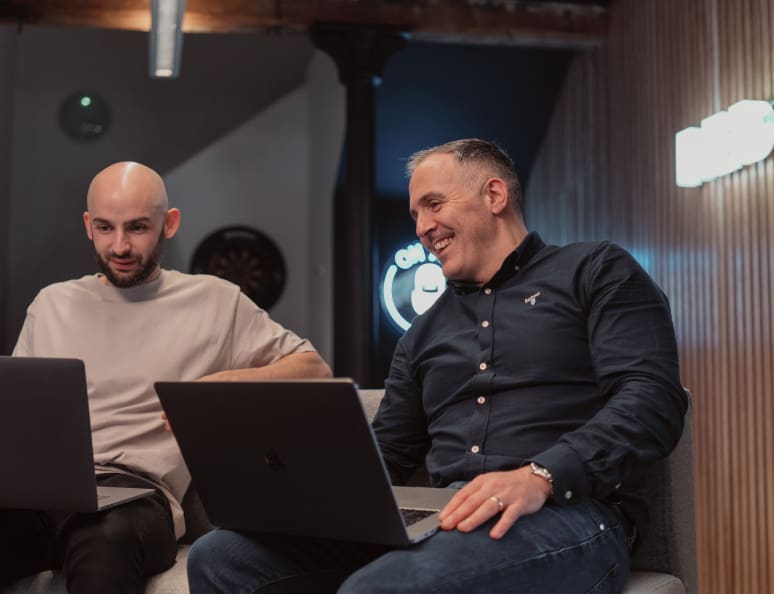
Through a series of collaborative discovery sessions, we delve into your business, stakeholders, target audience and objectives.
With precision questioning, we uncover potential hurdles, align on collaboration methods, and establish the bedrock for a successful digital partnership.


Strategy.
Over to us, we take everything discussed and learned, crafting an unparalleled strategy document and digital roadmap.
This document serves as the bedrock for our partnership, ensuring a strong foundation for success, with all stakeholders on board.
Implementation.
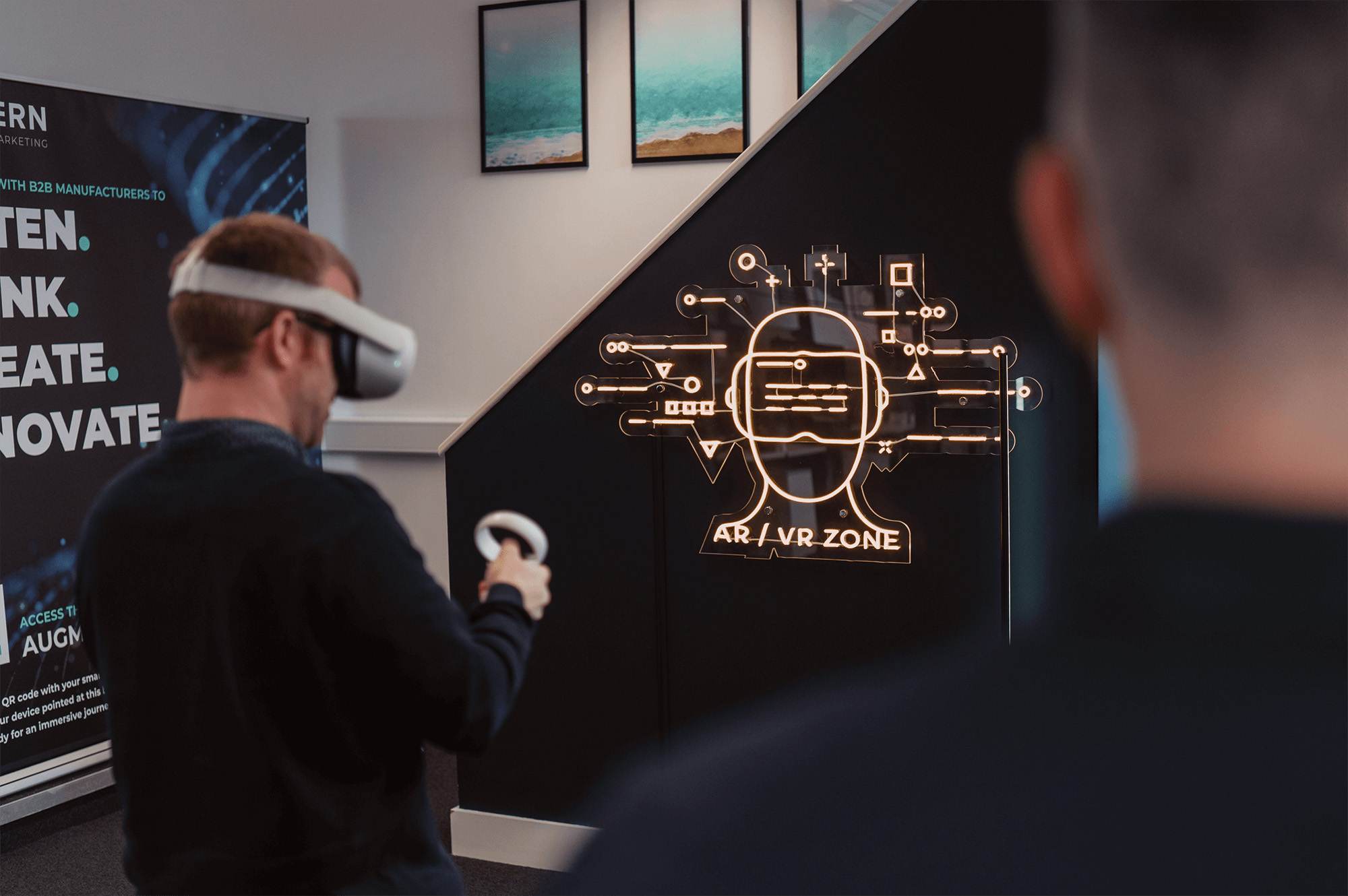
Our team of digital experts dive into crafting and implementing your digital transformation strategy.
We establish seamless communication channels connecting your team with our technology, marketing, and project specialists.
This ensures complete transparency throughout our partnership, aligned with the strategy and positioning detailed in our roadmap.


Partnership.
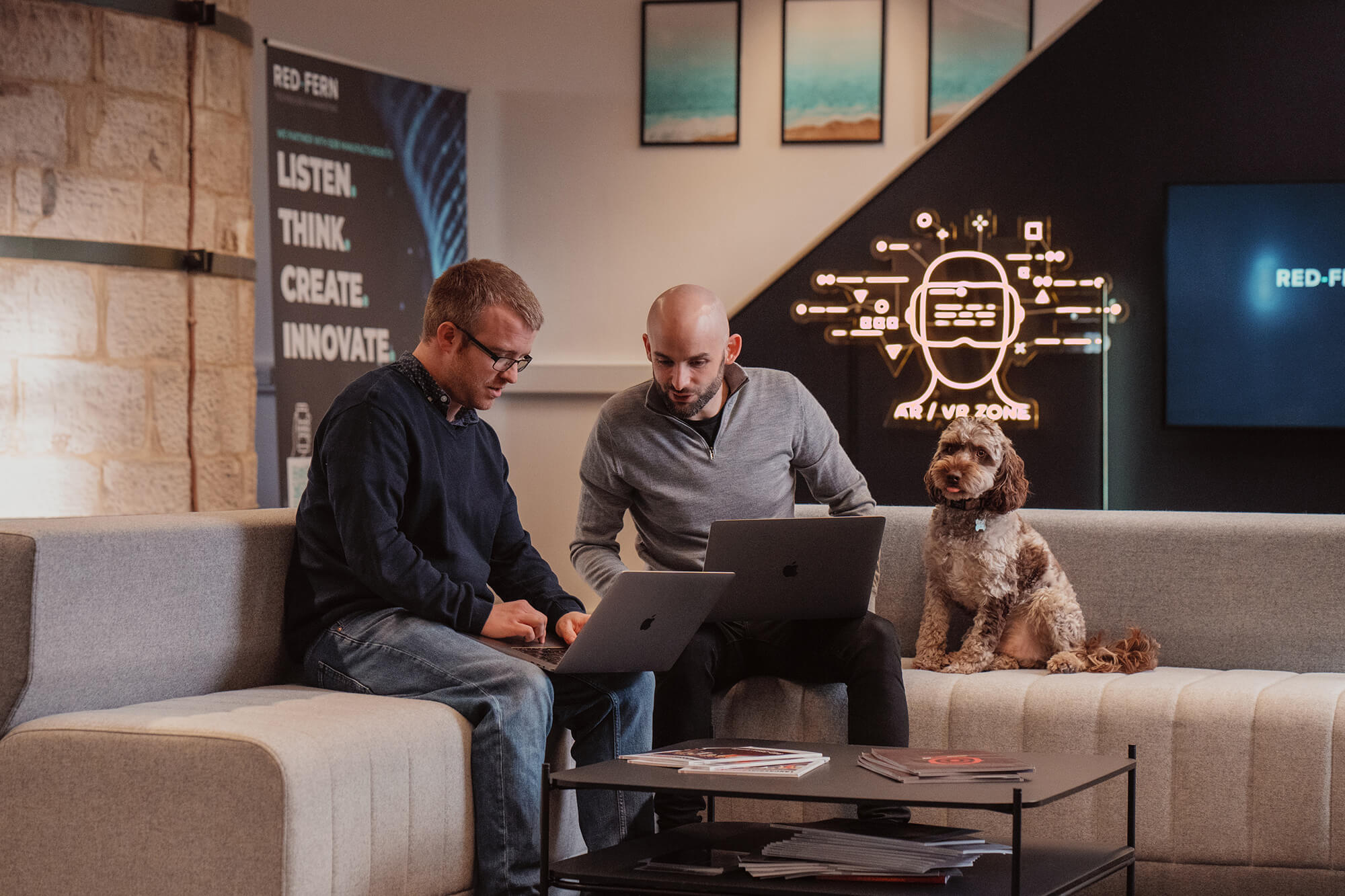
Each brand and company we engage with develops into a lasting partnership.
We fuse our world-class creative design, technology, marketing, and management expertise to consistently strategise, innovate, and evolve alongside the digital assets we co-create with you.
Manufacturers work with us for our knowledge, experience and credibility not just our capacity.





What manufacturers say about us.
Frequently asked questions
What does a manufacturing marketing agency do?
It builds the system that keeps your pipeline full when your sales team is not in the room. In manufacturing, most of the buying decision happens before anyone picks up the phone. Buyers are checking your website, reading your case studies, comparing you against competitors, and increasingly uploading specs into AI tools to generate a shortlist. A manufacturing marketing agency makes sure you are visible, credible and present across that entire journey. Not for a campaign. Continuously.
The reason a specialist matters is simple. A generalist agency that also handles a local restaurant and a beauty salon will not understand why your buyer takes 200 days to make a decision, or why a shortlist of three was finalised weeks before your sales director knew the opportunity existed.
Why do manufacturers need a specialist marketing agency?
A specialist manufacturing marketing agency exists for one reason: manufacturing is not a generic B2B market, and treating it like one is where most marketing investment gets wasted. Your buyers are engineers, procurement teams, operations directors and MDs who are all assessing technical risk, operational risk and commercial risk before they will even put you on a shortlist. You are not selling to a person. You are selling to a room.
In our experience, the biggest reason manufacturing marketing fails is not a lack of effort. It is a lack of specialist execution. We see the same pattern repeatedly: one marketing manager expected to handle strategy, copy, design, SEO, paid media, email and reporting. That is seven specialist roles given to one person. It is like asking a plumber to do a joiner's job.
How is marketing for manufacturers different from other B2B marketing?
Three things. The buying cycle runs six to eighteen months, not weeks. The decision involves a room full of stakeholders, not one buyer. And proof matters more than promise. Manufacturing buyers are not swayed by brand campaigns. They want evidence. Technical capability, sector experience, delivery track record. What a buyer cannot see, a buyer cannot trust.
The shift that most manufacturers have not caught up with is that digital is no longer marketing. It is due diligence. Your website, your content, your case studies, your search visibility. These are not lead generation tools. They are the evidence your buyer is reviewing before they decide whether you are safe to shortlist. Two suppliers can offer the same process, the same tolerances, the same service level. The one who shows up clearly, explains it simply and proves it confidently gets shortlisted more often.
How long does it take for manufacturing marketing to deliver results?
Most manufacturers see traffic and lead improvements within three to six months, with meaningful pipeline influence at nine to twelve months. But here is the honest part that most agencies will not tell you: months three to six will test your nerve. Leadership questions ROI. Sales loses patience. This is where most manufacturers change strategy, and it is exactly the wrong time to do it.
We see the same pattern across almost every client. Early signals appear quickly. Then the dip. Then, if you hold the line, compounding. Pipeline influence becomes visible. Enquiry quality improves. The system proves itself. Hot leads are the harvest. The first six months are the soil. If you change strategy every two weeks, you do not have a marketing system. You have marketing anxiety.
What is always-on marketing for manufacturers?
It is the opposite of how most manufacturers run marketing. Most run it in bursts. A campaign launches, leads come in, the campaign ends, pipeline dries up. Every time marketing goes quiet, buyers who were researching you move on. In a buying cycle that runs 200 days, going quiet for even two months can remove you from shortlists you did not know existed.
Always-on is an operating model. Research informs strategy. Strategy drives content, SEO and paid. Those channels generate demand. CRM captures and proves it. The data feeds back into the next cycle. It compounds. Every touchpoint contributes, and the businesses that win are the ones that never go quiet.
How do you measure manufacturing marketing ROI?
Through pipeline influence, not last-click leads. The biggest mistake manufacturers make is judging marketing by the final touchpoint before an enquiry. In a buying cycle that involves over twenty touchpoints across 200 days, giving all the credit to the last click is like giving all the credit to the estate agent who showed you the house, ignoring the six months of research that got you there.
We build attribution into the system from day one using HubSpot. That means tracking which content influenced which deals, how long prospects engaged before converting, and what the true cost per qualified opportunity is across the full cycle. If you cannot show the board what marketing is doing for pipeline and revenue, you are one budget review away from losing it.
Should a manufacturer build an in-house marketing team or hire an agency?
It depends on what you can realistically resource. We have seen the same scenario dozens of times: a capable marketing manager is hired to handle marketing. Expected to own strategy, copy, design, SEO, paid, email, reporting and events. Seven jobs. No specialist depth. Predictable outcome. Not because the person is not good enough, but because the model is broken.
The strongest model for most manufacturers is hybrid. Keep brand knowledge and sales alignment in-house. Bring in a specialist agency for the disciplines that need depth. A solid agency retainer gives you multiple specialists wrapped into one commercial outcome. The agency becomes an extension of your team, not a replacement for it. In our experience, that hybrid model is where the real results come from.
What should a manufacturer look for when choosing a manufacturing marketing agency?
Sector experience first. Not just B2B experience. Manufacturing experience. A manufacturing marketing agency that understands buying cycles, compliance requirements, technical content, and what a qualified lead actually looks like in your market. If they are selling you tactics before they understand your commercial direction, that tells you everything you need to know.
Then look at longevity. How long do their clients stay? Agencies that deliver results keep clients for years, not months. And ask who will actually work on your account. If the answer is one account manager outsourcing to freelancers, you are paying agency rates for freelancer execution. Finally, ask about attribution. Can they prove what marketing is doing for your pipeline? If the answer is vanity metrics and engagement reports, keep looking.
Where to next
Want to see how this works for your business?
Everything above is the always-on system a manufacturing marketing agency should run: research, strategy, the channels that generate and capture demand, and the CRM that proves it. Explore the services that make it up, or talk to a specialist about your business.
Talk to a specialist