A system the MD backs, Sales trusts and Finance signs off.


A manufacturing marketing agency is a specialist B2B agency that builds marketing systems around the way industrial buyers research, evaluate and choose suppliers. Not consumer marketing applied to a factory. Not a generalist agency that lists manufacturing as one of twenty sectors on a capabilities page or has case studies that span B2B and consumer brand businesses. A genuine manufacturing marketing specialist understands that buying cycles run six to eighteen months, that decisions involve multiple stakeholders, and that most of the shortlisting happens before your sales team even knows the opportunity exists. Red-Fern is a manufacturing marketing agency with over 20 years of specialist experience working exclusively with industrial businesses, from manufacturers turning over £10 million through to multi-billion-pound global groups across a multitude of sectors.
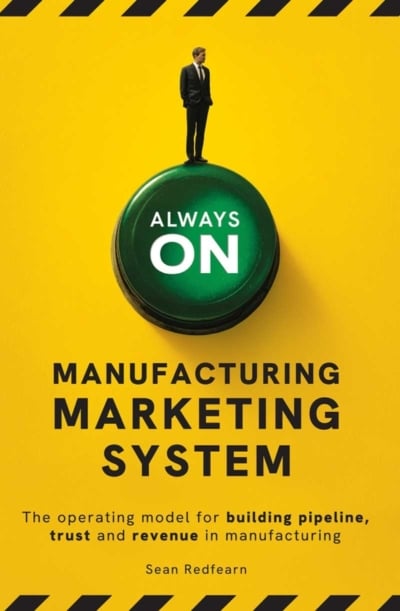
Most manufacturers treat marketing like a tap. Turn it on when sales slow down. Turn it off when the order book fills up. Then wonder why pipeline dries up six months later. Sean Redfearn, the founder of Red-Fern and the brainchild behind the Always-On Manufacturing Marketing System was built to replace that cycle with something that compounds. A system that keeps you visible, credible and front of mind across every stage of the buying journey, so you are already on the shortlist before the first conversation happens.

Why is manufacturing marketing different from general marketing?
Manufacturing marketing operates in a different commercial reality to almost every other sector. The buying cycles are longer. The stakeholders are harder to reach. The decisions are slower, more cautious and driven by risk as much as price.
An average B2B manufacturing sales cycle runs anywhere from six to eighteen months, sometimes longer. During that window, the buyer is researching independently. They are checking your website, reading your case studies, looking at your certifications, comparing your capabilities against two or three other suppliers. A huge part of the decision happens before Sales is contacted. If your marketing is not doing the selling during that invisible phase, you are not part of the conversation.
The other reality that generalist agencies miss entirely is the buying committee. I spent 15 years working in manufacturing before I started Red-Fern, and I watched this play out from the inside. You are not selling to a person. You are selling to a room. The engineer wants to know if your spec holds up. QA wants to see certifications. Operations wants reassurance you will not disrupt their production line. Procurement wants to know you are a safe supplier. Finance wants the numbers to justify the spend. The MD wants to know you are a strategic fit, not a reputational risk. If your content only talks to one stakeholder, you are leaving the rest of the room unconvinced.
This is why specialist marketing for manufacturers exists as a discipline. Not because manufacturing is a niche worth targeting, but because the buying behaviour demands a fundamentally different approach. Generalist agencies are built for shorter cycles, simpler decisions and audiences that convert on emotion. Manufacturing buyers convert on trust, proof and consistency over time.
Generalist agency vs. specialist manufacturing marketing agency
| Generalist agency | Specialist manufacturing marketing agency | |
| Buying cycle understanding | Built for short cycles (days to weeks) | Built for 6-18 month cycles with multiple decision gates |
| Audience knowledge | Broad consumer or SME audiences | Procurement, engineering, QA, operations, finance, MDs |
| Content approach | High volume, keyword-driven | Technical depth mapped to each stakeholder’s concerns |
| Campaign model | Campaign-based (start, stop, report) | Always-On system that compounds visibility over time |
| Attribution | Last-click reporting | Multi-touch attribution across the full buying journey |
| Proof and credibility | Portfolio and testimonials | Sector-specific case studies, certifications, delivery data |
| Typical client mix | Restaurants, retail, SaaS, beauty, mixed | Manufacturers exclusively |
What does a manufacturing marketing agency actually do?
Every marketing channel has a specific job in a manufacturing buying cycle. Effective marketing for manufacturers means understanding which channel does what, when, and for which stakeholder. The difference between a specialist and a generalist is that precision.
Your website is your digital factory gate.
In manufacturing, digital is no longer marketing. It is due diligence. Buyers check your website before they ever pick up the phone. They are looking for capability pages, certifications, case studies in their sector, delivery performance data and whether the company looks active and credible. Two suppliers can offer the same process, the same tolerances, the same service level. But the one who shows up clearly, explains it simply, proves it confidently and stays present consistently gets shortlisted more often. Your website is not a brochure. It is the first audit. See how we approach web design for manufacturers →

SEO and content that gets you found by the right buyers.
Content for manufacturers is not about volume. It is about answering the specific questions that industrial buyers, engineers, procurement managers and specifiers are actually searching for. Ranking for the terms your buyers use, in the way your buyers search, at the stage of the cycle where they need the answer. That includes traditional search, but it increasingly includes AI search too. Buyers are now uploading RFQs, technical specifications and compliance requirements directly into AI tools and asking for a shortlist of suppliers who match. No Google search. No trade directory. No phone call. Just a prompt and a result. If your content is not structured for both search engines and AI retrieval, you are invisible in two places instead of one. Learn more about SEO for manufacturers → and content marketing for manufacturers →
PPC and paid media for manufacturers.
Paid channels in manufacturing are not about driving impulse clicks. Google Ads targets buyers actively searching for solutions. LinkedIn Ads reaches decision-makers by job title, seniority and industry. Display and remarketing keep you visible across the buying cycle, so when that buyer revisits the decision in month nine, your name is still in the room. For manufacturers with complex, multi-stakeholder audiences, precision matters more than reach. See our paid media services for manufacturers →
Email, CRM and nurturing through long buying cycles.
Most deals do not die. They drift. A prospect engages, requests a quote, then goes quiet for four months. Without a nurture system, that lead is lost. Email marketing for manufacturers is not newsletters for the sake of newsletters. It is stage-based nurture that delivers the right content at the right deal stage, keeps the conversation alive through the silent middle of the funnel, and makes sure no lead is orphaned. See how we use HubSpot for manufacturers →
LinkedIn and social media for B2B manufacturers.
LinkedIn is one of the strongest platforms for reaching B2B manufacturing audiences because it allows precise targeting by job title, industry, company size and seniority. Decision-makers including procurement directors, operations managers, engineers and specifiers are active on the platform. But it is not just paid. Organic content that demonstrates expertise builds credibility with buyers who are already watching. The combination of paid reach and organic proof is where LinkedIn becomes a serious pipeline channel for manufacturers. See our social media services for manufacturing →
Brand and positioning for manufacturers.
Brand in manufacturing is not a logo exercise. It is how clearly you communicate what you do, where you win and why a buyer should trust you over a competitor. Strong brand positioning gives every other channel a foundation to build on. Weak positioning means every campaign starts from scratch.
What is the Always-On Manufacturing Marketing System?
In over two decades of working with manufacturers, I have seen the same pattern repeat. Most manufacturing marketing fails not because nobody cares, but because it is treated as a project, not a system. A campaign runs, it finishes, the team moves on to the next trade show, and for three months nothing happens. Every time you go quiet, you are removed from a shortlist that formed silently in the middle of the funnel.
The Always-On system was built to solve this. It is the operating model for building pipeline, trust and revenue in manufacturing. Not a set of tactics. Not a campaign framework. An operating model that compounds over time.
It is built on five principles:
Commercial alignment. Marketing must serve the commercial direction of the business. If the MD is pushing into aerospace and marketing is still writing about general engineering, that disconnect kills pipeline before it starts.
Middle-of-the-funnel influence. Generating awareness is the easy part. Keeping someone engaged across a 200-day sales cycle while they compare you against three other suppliers, that is where deals are won and lost. The middle of the funnel is where confidence gets built or where you get quietly dropped from the shortlist.
Always-On execution. Campaigns fade. Systems compound. Marketing must work every day, building visibility and trust before your sales team even knows an opportunity exists. It is like going out for a beer and drinking seven pints. It is not the seventh pint that got you drunk. It is all of them. That is the compounding effect.
Specialist execution. SEO, paid media, automation, analytics. These are not generalist roles. Handing your entire digital strategy to a generalist agency that also handles a local restaurant and a beauty salon produces predictable results. And not in a good way. A manufacturer is a manufacturer. Not a digital agency.
Attribution and accountability. If you cannot show the board what marketing is doing for pipeline and revenue, you are one budget review away from losing it. Attribution in long buying cycles means tracking influence across multiple touchpoints, not relying on last-click reporting that tells you almost nothing about how a deal actually came together.
The system follows a clear logic: Be Found. Be Trusted. Be Chosen. None of these work in isolation. Together, they compound. Visibility creates eligibility. Eligibility creates opportunity.

What does a manufacturer’s digital credibility stack look like?
Every manufacturer’s digital presence sits on five layers. If any one layer is weak, the whole stack wobbles.
Findability. The right buyers must be able to find you. Appearing for relevant search terms on the platforms where buyers actually look.
Clarity. When they land on your site, they understand what you do and where you win within seconds. An engineer and a procurement lead should both be able to answer that question from your homepage.
Proof. Credible evidence. Case studies, certifications, data, client names, sectors. Not vague claims. Specifics.
Reassurance. Reduce perceived risk. Delivery process documentation, QA detail, FAQs, performance stats. Anything that helps a buyer build a case internally without having to chase you.
Presence. Visible consistently over time. Not a burst of activity followed by three months of silence.
The safer you look, the more often you get shortlisted.
What results should manufacturers expect from marketing?
Marketing for manufacturers delivers measurable commercial outcomes when it is built as a system, not a series of one-off campaigns. Here is what the Always-On approach has delivered for three manufacturing clients:
IrvinGQ (global manufacturer, parachute and aerospace systems): +151% website traffic, +102% organic search traffic, +401% organic social traffic, +89% form submissions. Services: global website launch, augmented reality, marketing.
Biological Preparations (manufacturer, life sciences): +35% increase in user sessions, 12x organic keyword rankings, +27% leads generated, 10x sales performance. Services: branding, HubSpot, immersive website, marketing.
Evoke (manufacturer, retail and commercial interiors): +85% improvement in site speed, +20% lead increase year on year, +5% sales conversions. Services: brand refresh, design, UX, HubSpot CMS development.
These are the outcomes of sustained, specialist marketing for manufacturers. Not vanity metrics. Commercial results tied to pipeline and revenue.
I have walked manufacturers through this timeline dozens of times, and the honest version looks like this. Months one to two, tracking improves, visibility rises, remarketing pools build and early signals appear. Months three to six is the dip. Leadership questions ROI. Sales loses patience. Finance compares spend to last-click leads. This is where most manufacturers panic and change strategy. Months seven to nine, the first lift. Repeat visits to proof pages. Higher intent behaviour from manufacturing buyers. Better enquiry quality. Months ten to twelve, compounding. Pipeline influence becomes clearer. Stage velocity improves.
Hot leads are the harvest. The first six months are the soil. A specialist manufacturing marketing agency will set clear KPIs and realistic timelines from the outset, because managing expectations through the dip is as important as the strategy itself.
How do you choose the right manufacturing marketing agency?
Manufacturers should look for agencies with demonstrable experience in B2B marketing, a track record of working with manufacturing clients, and the ability to communicate technical products clearly to informed audiences. There are a few things worth checking.
Do they understand long buying cycles, or are they set up for quick-turn consumer campaigns? Can they show concrete results from previous manufacturing work, with real data, not just logos on a page? Do they bring creative and digital capability under one roof, or are they subcontracting half the work? And critically, do they understand the commercial reality of manufacturing, the stakeholders, the risk aversion, the procurement processes?
Agencies that combine strategic positioning, creative production and digital performance, and that bring specialist tools to campaign planning and optimisation, are preferable to those that outsource any of those disciplines. In our experience, manufacturers get the best outcomes from agencies that operate as an extension of their team, not as a supplier on a project-by-project basis.
Red-Fern has worked exclusively with manufacturers for over 20 years. We have stood on both sides of the table, with 15 years of client-side manufacturing experience before founding the agency. We work with manufacturers from £10 million turnover through to multi-billion-pound global groups. Our retention rate reflects partnerships, not projects.

FAQs
What does a manufacturing marketing agency do?
A manufacturing marketing agency develops and delivers marketing strategies specifically for manufacturers, helping them reach industrial buyers, generate B2B leads and build brand credibility across long buying cycles. Services typically include brand development, SEO, PPC, content marketing, social media, email campaigns and advertising, all tailored to the complex, multi-stakeholder buying processes that manufacturers sell into.
How is B2B manufacturing marketing different from general marketing?
Manufacturing marketing must communicate to technically knowledgeable buyers, engineers, procurement managers, specifiers and operations directors, who evaluate capability, reliability and compliance as heavily as price. Sales cycles run six to eighteen months. Decisions involve multiple stakeholders. Effective manufacturing marketing builds credibility at every stage of that cycle rather than driving immediate conversion.
What is the Always-On Manufacturing Marketing System?
The Always-On system is an operating model for building pipeline, trust and revenue in manufacturing. Rather than campaigns that start and stop, it keeps manufacturers visible across the entire buying cycle. Built on five principles: commercial alignment, middle-of-the-funnel influence, always-on execution, specialist delivery and attribution. It compounds over time.
Why do manufacturers need a specialist marketing agency?
Manufacturing buying behaviour is fundamentally different from consumer or short-cycle B2B. Buying committees involve multiple stakeholders, each with different concerns. Cycles run months, not weeks. Risk aversion is high. Generalist agencies built for shorter cycles and simpler audiences consistently underestimate this complexity. A specialist manufacturing marketing agency understands the commercial reality and builds systems around it.
How long does it take to see results from manufacturing marketing?
Paid advertising campaigns can generate results within weeks. SEO and content marketing typically take three to six months to build meaningful momentum. Brand positioning and awareness campaigns operate on longer timescales. Months three to six are typically the hardest, when leadership questions ROI before compounding takes effect. A good agency sets clear KPIs and manages expectations through this phase.
What types of manufacturers do you work with?
Red-Fern works with manufacturers across aerospace, medical, rail, automotive, renewables and precision engineering. Our clients range from manufacturers turning over £10 million through to multi-billion-pound global groups. The common thread is a B2B sales model with technical products, informed buyers and complex procurement processes.
How does AI and GEO affect manufacturing marketing?
Buyers are now using AI tools to research and shortlist suppliers, uploading RFQs and compliance requirements directly into AI platforms. Manufacturers need to be visible in AI-generated responses, not just Google search results. Content structured for both search engines and AI retrieval, with clear definitions and self-contained proof statements, is now a requirement.
What should a manufacturer’s website include?
A manufacturing website must function as a digital factory gate, not a brochure. Buyers check capability pages, certifications, case studies, delivery performance data and team credibility before making contact. The five essentials are findability, clarity, proof, reassurance and consistent presence. If any one of these is weak, the whole digital credibility stack wobbles.
How much does manufacturing marketing cost?
Costs vary depending on scope, channels and campaign complexity. A focused SEO and content programme might start from a few thousand pounds per month, while integrated campaigns spanning paid media, creative and content require larger budgets. The right question is not how much it costs, but what commercial outcomes it delivers and whether the investment compounds over time.
Should manufacturers invest in LinkedIn marketing?
Yes. LinkedIn allows precise targeting by job title, industry, company size and seniority, making it one of the strongest platforms for B2B manufacturing marketing. Decision-makers including procurement directors, operations managers and specifiers are active on the platform. Combining paid campaigns with organic thought leadership accelerates brand awareness and pipeline among target buyer groups.
What is the middle of the funnel and why does it matter for manufacturers?
The middle of the funnel is the phase between initial awareness and final decision. In manufacturing, this phase can last months. Buyers compare suppliers, check proof and build internal confidence. Most manufacturers lose deals here not because they were outbid, but because they went quiet. Staying present in this phase is where Always-On delivers its strongest advantage.
How do you measure manufacturing marketing ROI?
Last-click attribution tells you almost nothing in a six to eighteen month buying cycle. Effective measurement requires multi-touch attribution that tracks influence across the full journey, from first visit through to closed deal. Good enough attribution beats perfect attribution, because without it, marketing is one budget review away from losing investment.
The shortlist was already made. Make sure you are on it.
If your marketing stops and your pipeline does not notice for six months, something is broken. Not your sales team. Not your product. Your system.
Red-Fern builds Always-On marketing systems for manufacturers who need to be found, trusted and chosen, consistently, across buying cycles that run months, not weeks. Marketing for manufacturers is all we do. We have been doing it for over 20 years. We have stood on both sides of the table. And we only work with manufacturers.
Book a call with a specialist →
About the author
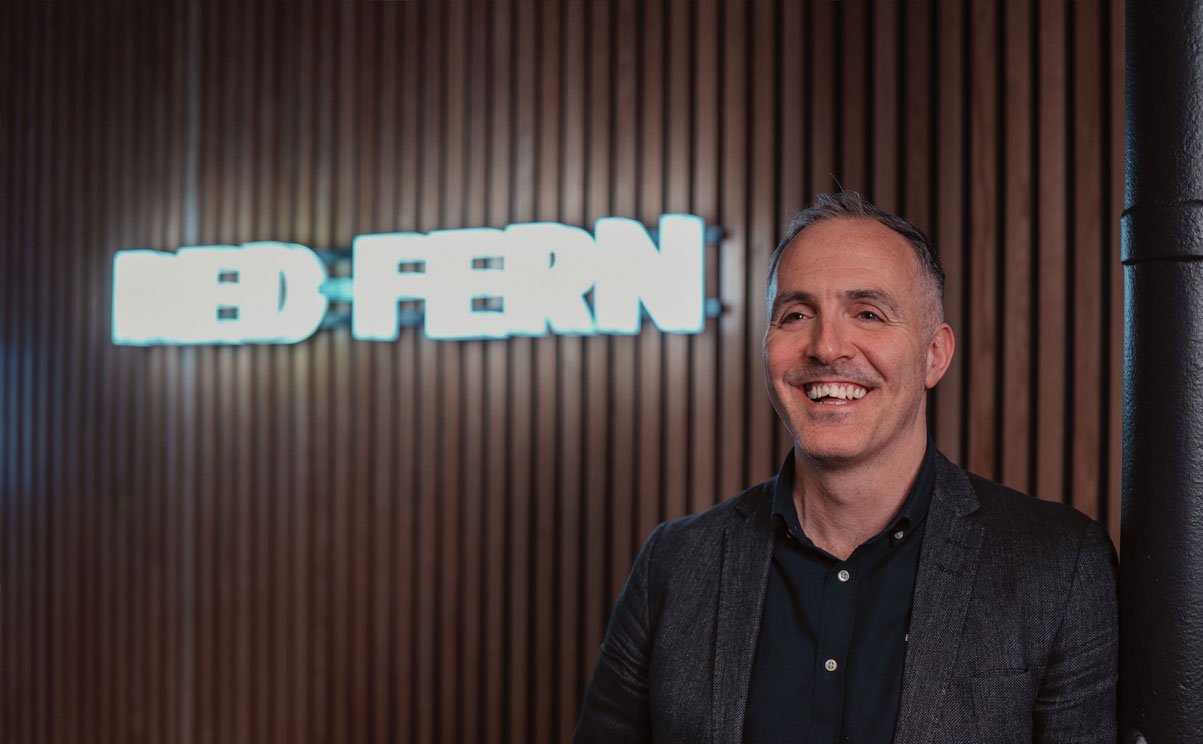
Sean Redfearn is the founder of Red-Fern, a specialist manufacturing marketing agency established over 22 years ago. Before founding the agency, Sean spent 15 years working client-side in print manufacturing, progressing from apprentice through to running production workflows. That combination of hands-on manufacturing experience and two decades of agency leadership is what shapes Red-Fern’s approach to marketing for manufacturers. Sean is the author of The Always-On Manufacturing Marketing System: The Operating Model for Building Pipeline, Trust and Revenue in Manufacturing. He works exclusively with industrial businesses across aerospace, medical, rail, automotive and renewables, from £10 million turnover through to multi-billion-pound global groups.